Laura Adel, Tenderness of Art Analysis and Creation of Immersive Interactive Environments

Publication of a doctoral dissertation
In the contemporary world, where reality intertwines with virtuality, automation with the work of human hands, and communication with the flow of data, the social sense of dissociation and cognitive overload continues to grow. In my doctoral dissertation, I analyze and create works emerging from the field of new technologies, seeking their contemplative and immersive resonance. I focus on the sensitivity of art as a space for dialogue and deepened perception.
Oscillating around the concept of the dialogical disposition[1], I propose a model for experiencing immersive interactive installations. It is based on three pillars: the Figure of the Viewer, the Environment, and the Image of the Environment, which emerges at the moment of their encounter. The analysis of the recipient’s profile reveals the ways in which meanings and behaviors are constructed — the very planes prepared for the reception of art. The Environment constitutes a set of formal means of expression. The Image of the Environment is a morphing structure that develops within cognition. It is there that I locate the titular sensitivity of art — its responsiveness to perception and its attentiveness to action.
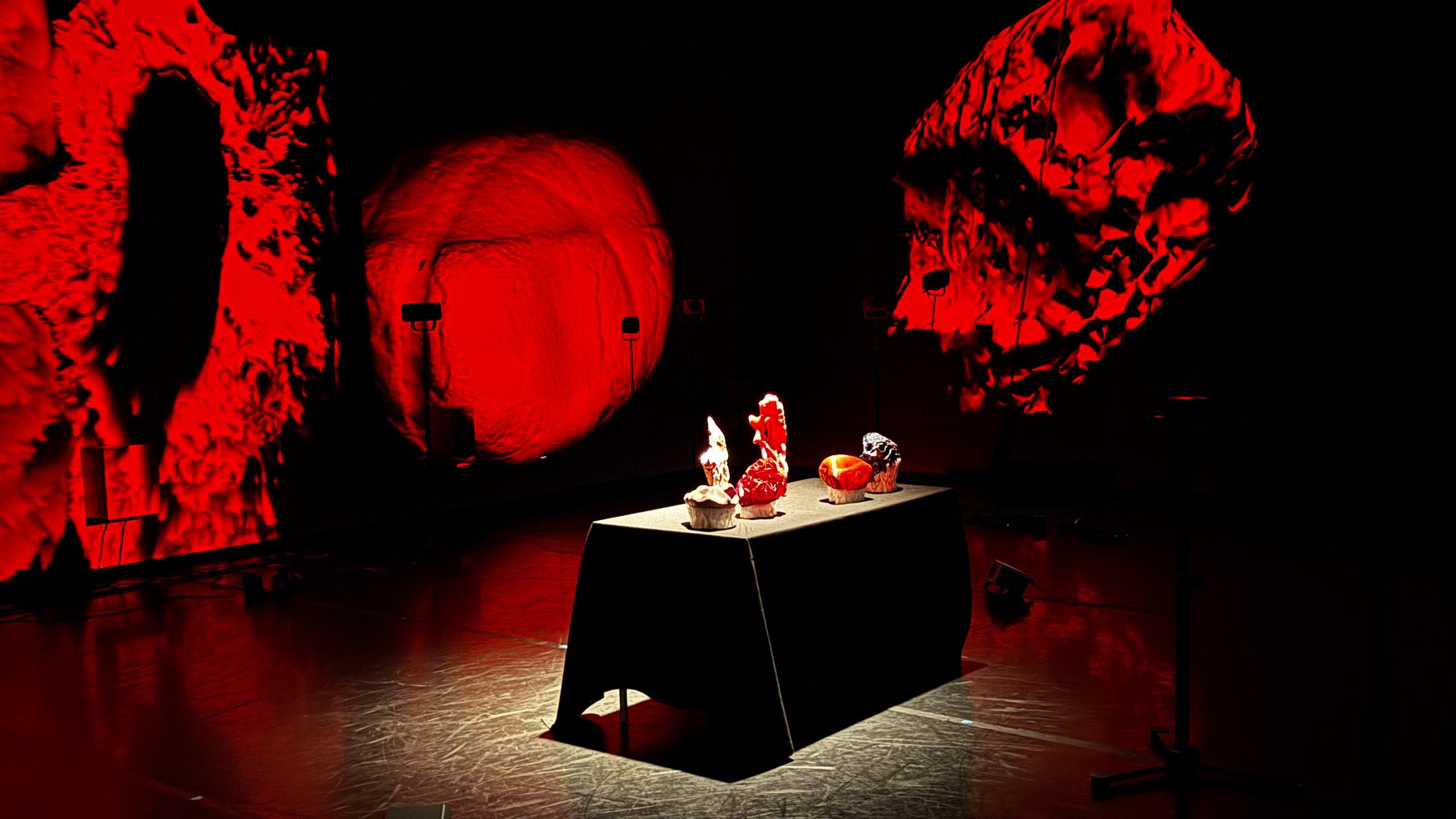
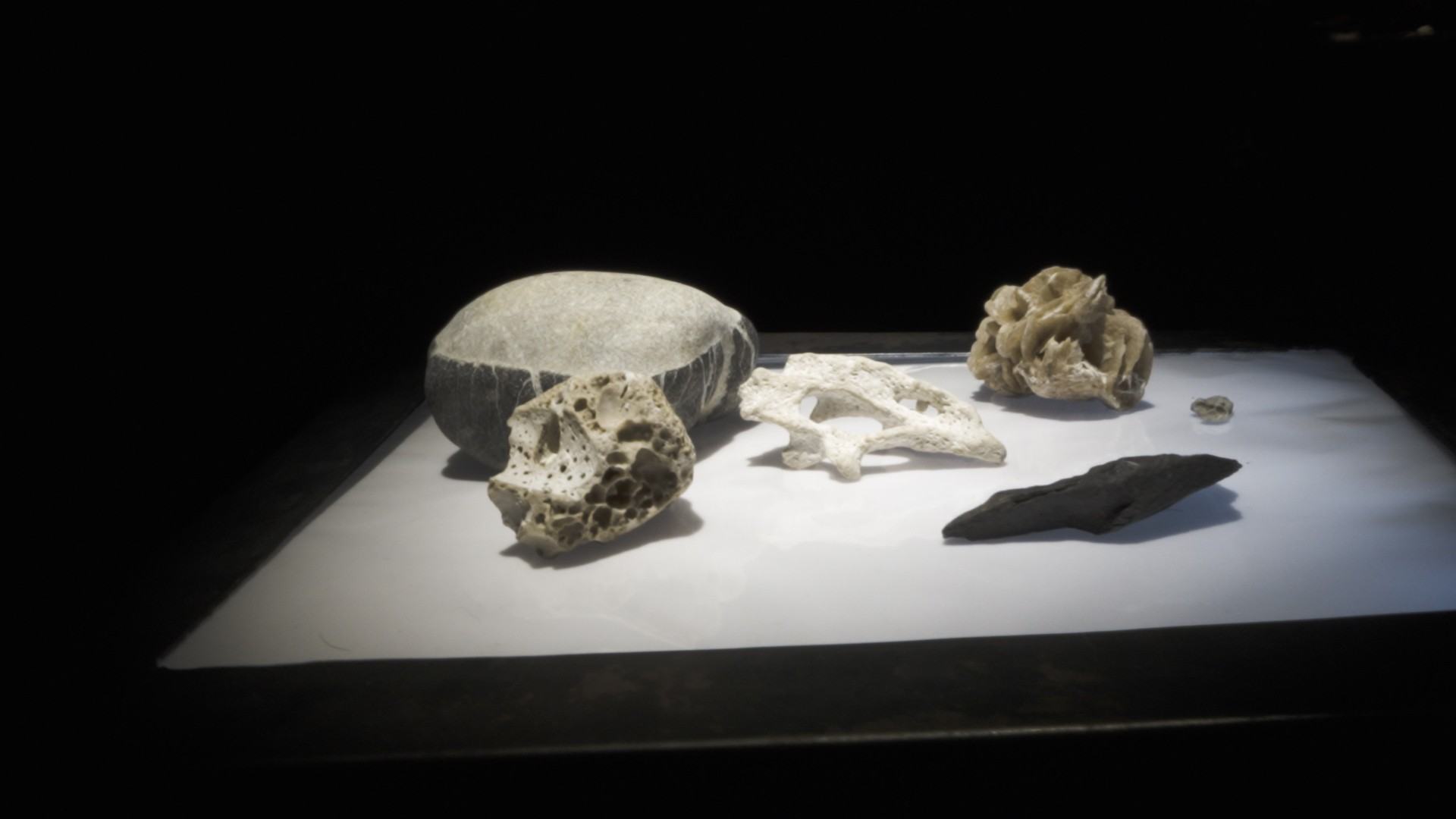
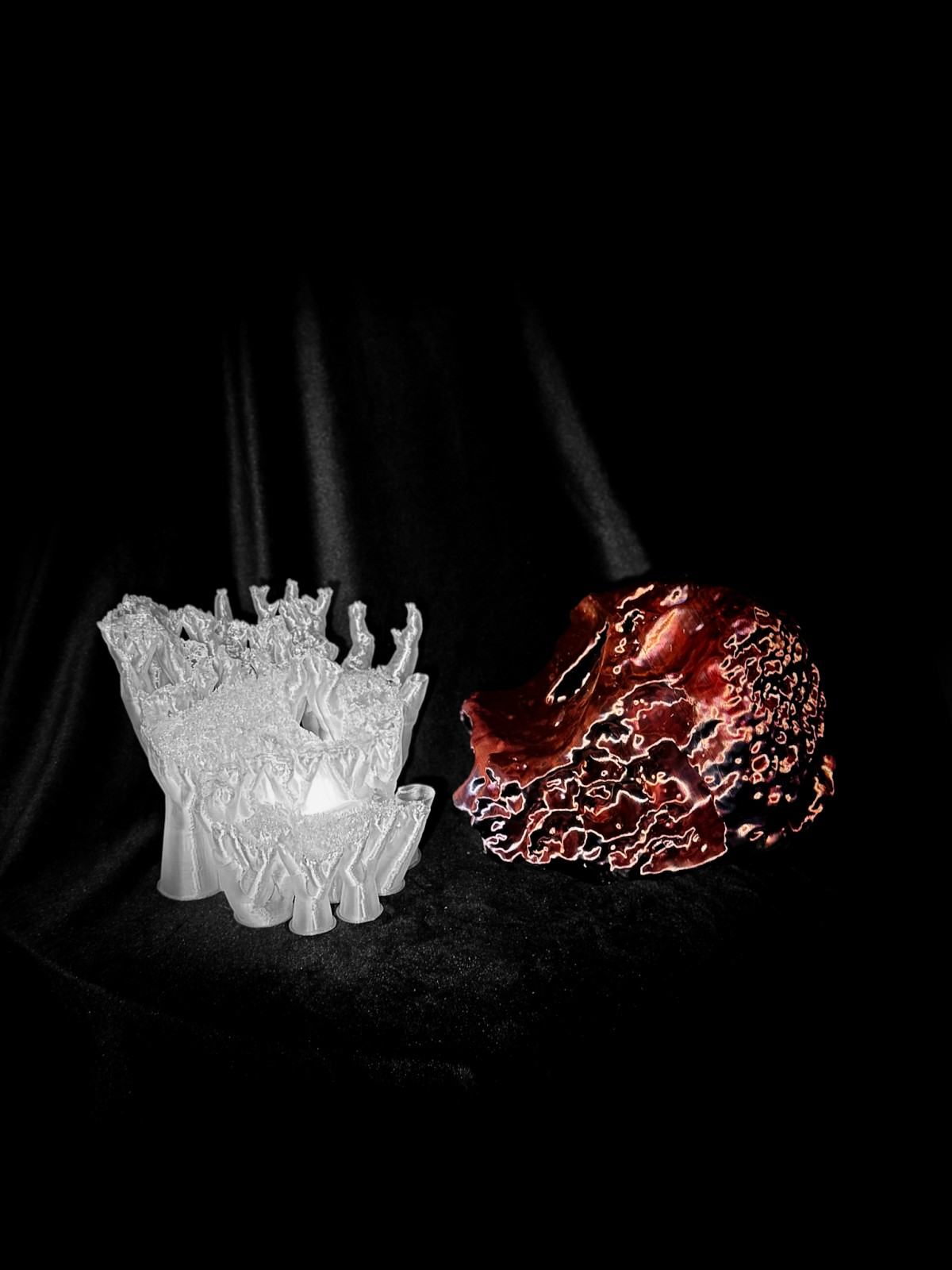
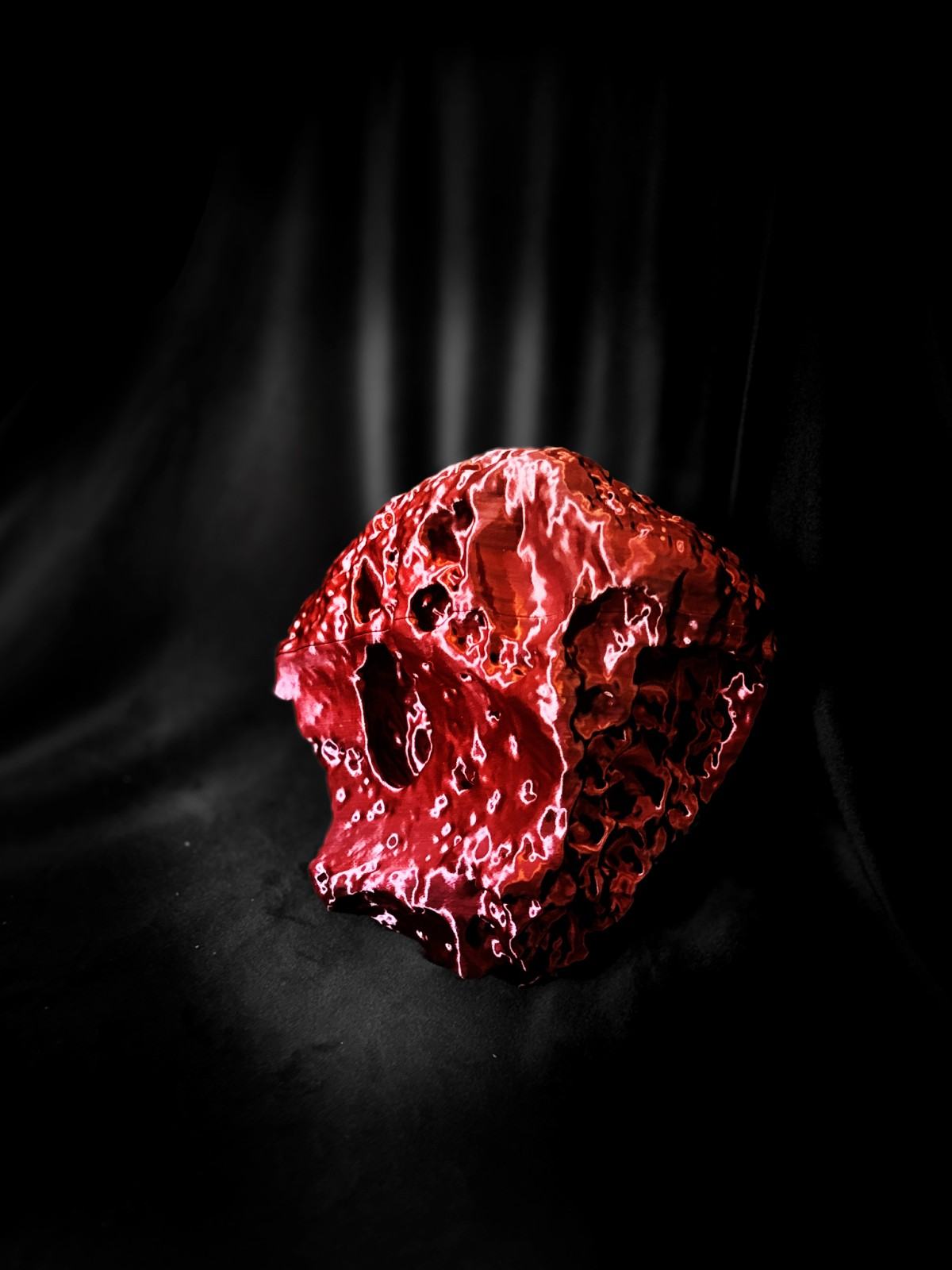
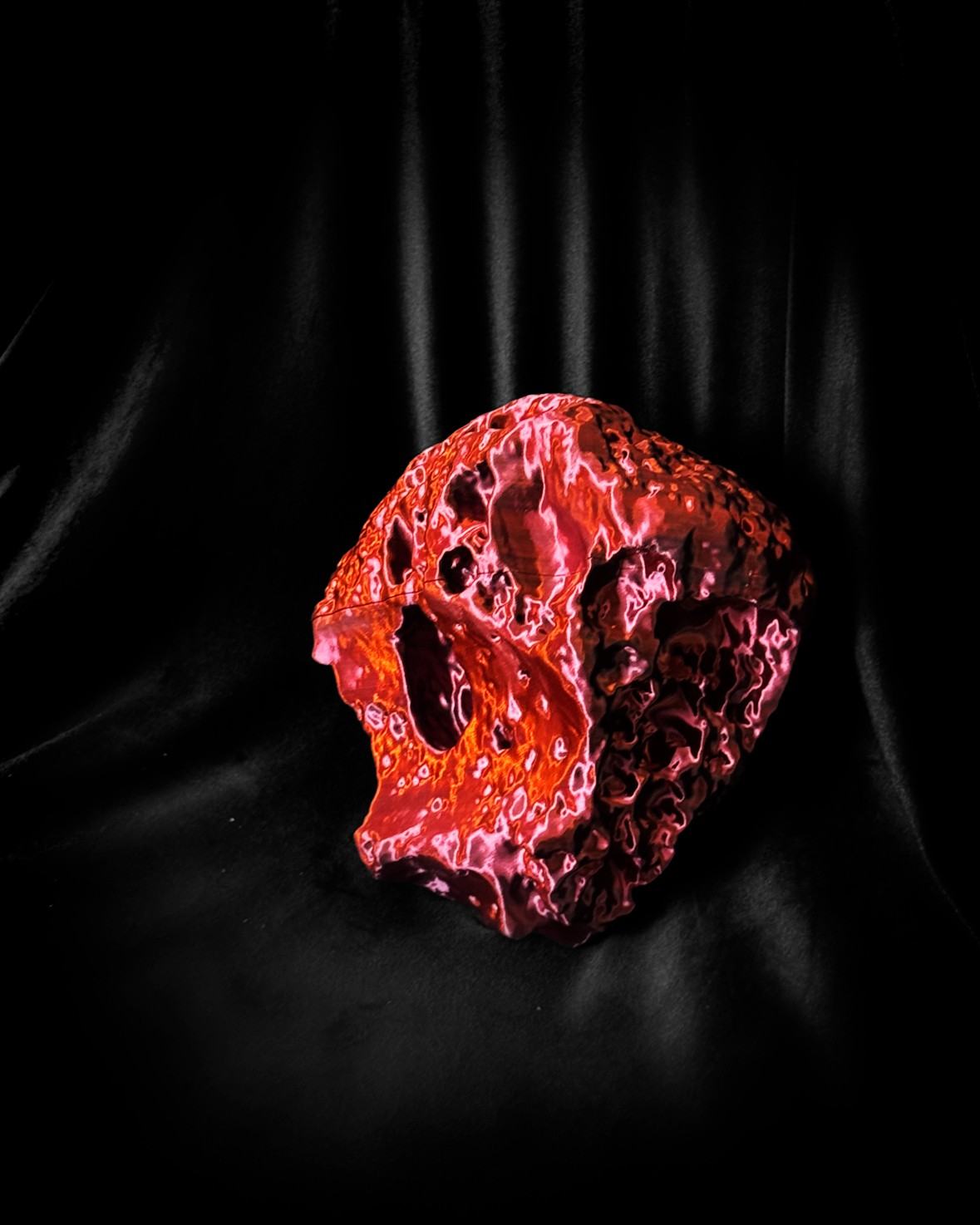
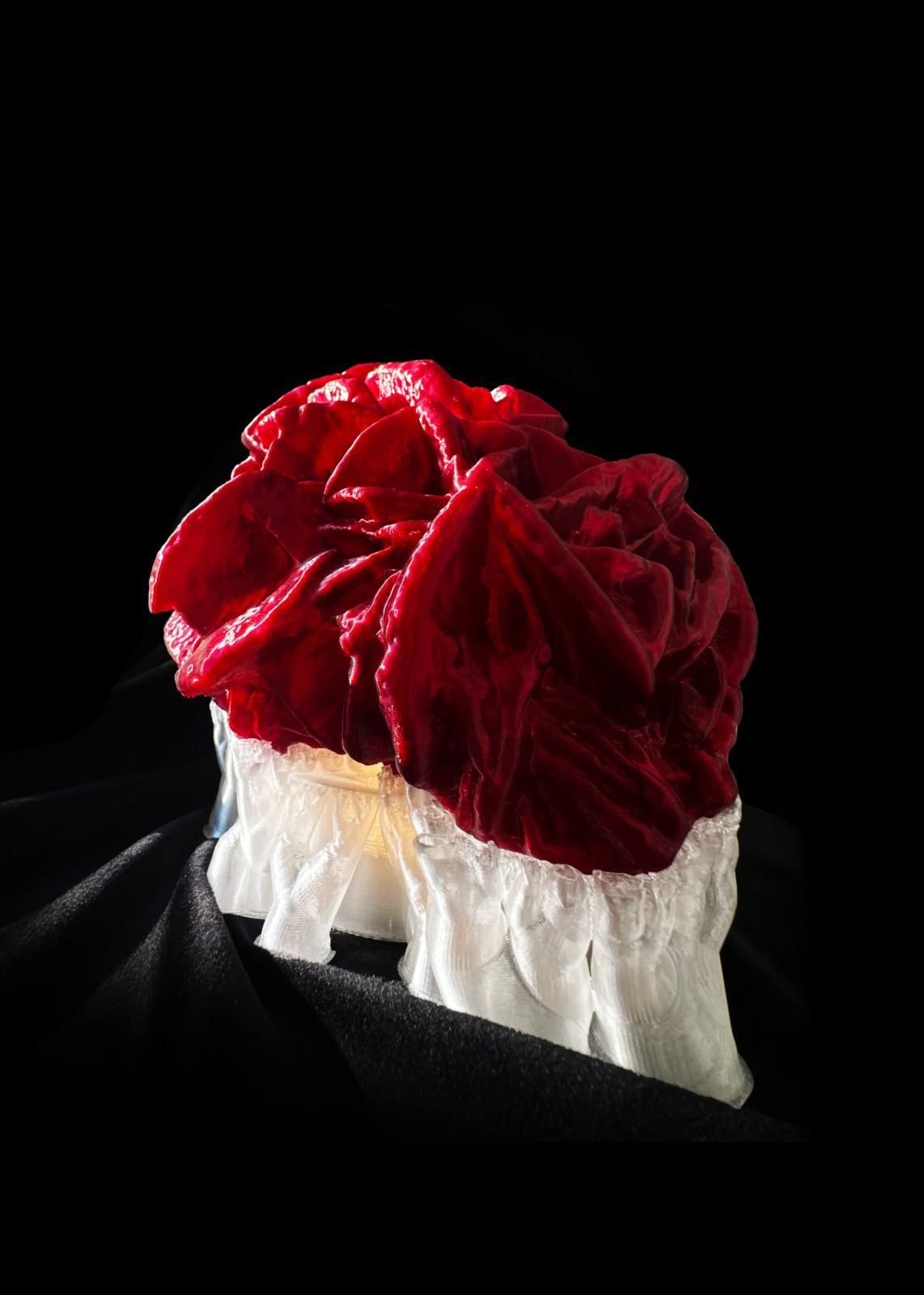
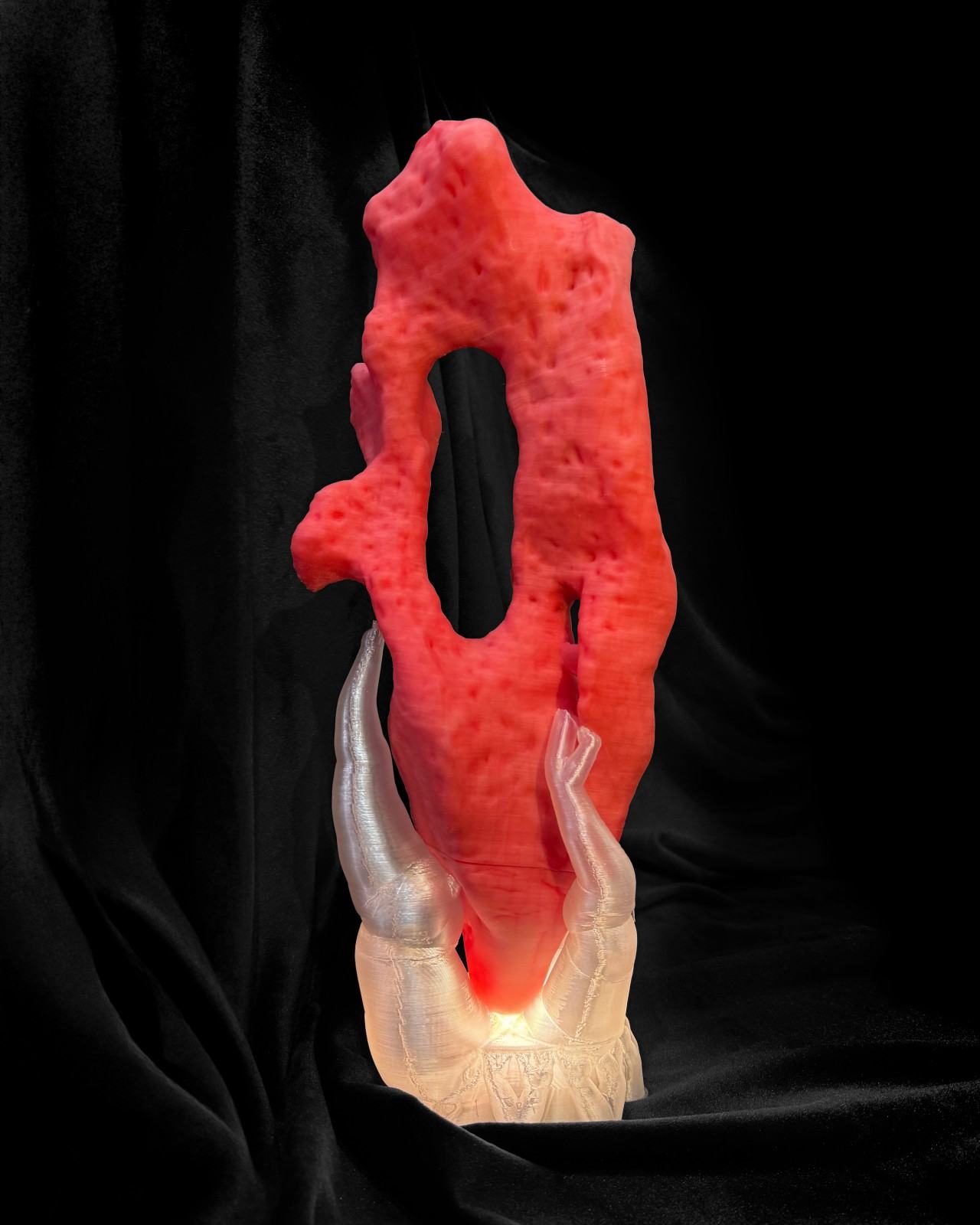
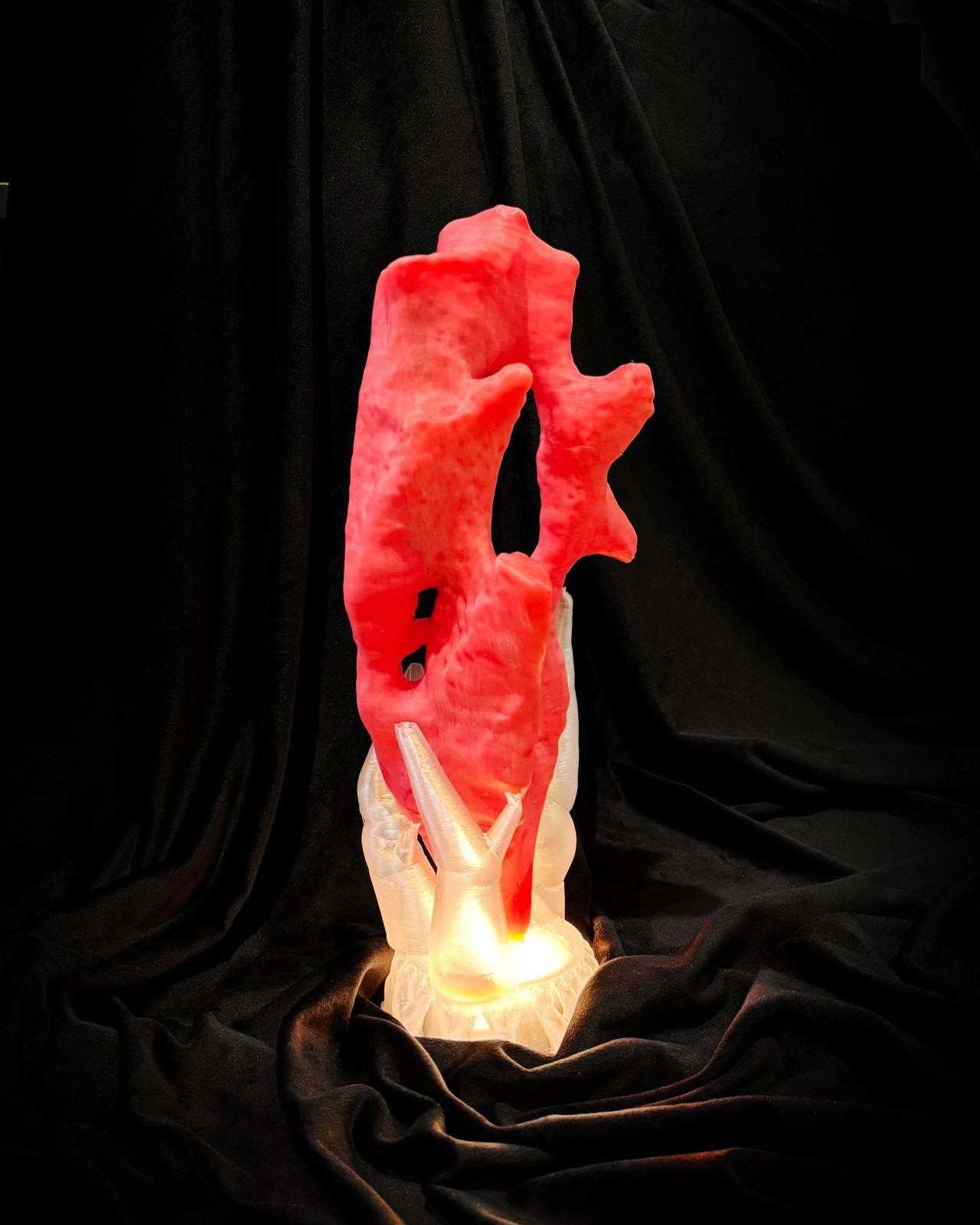
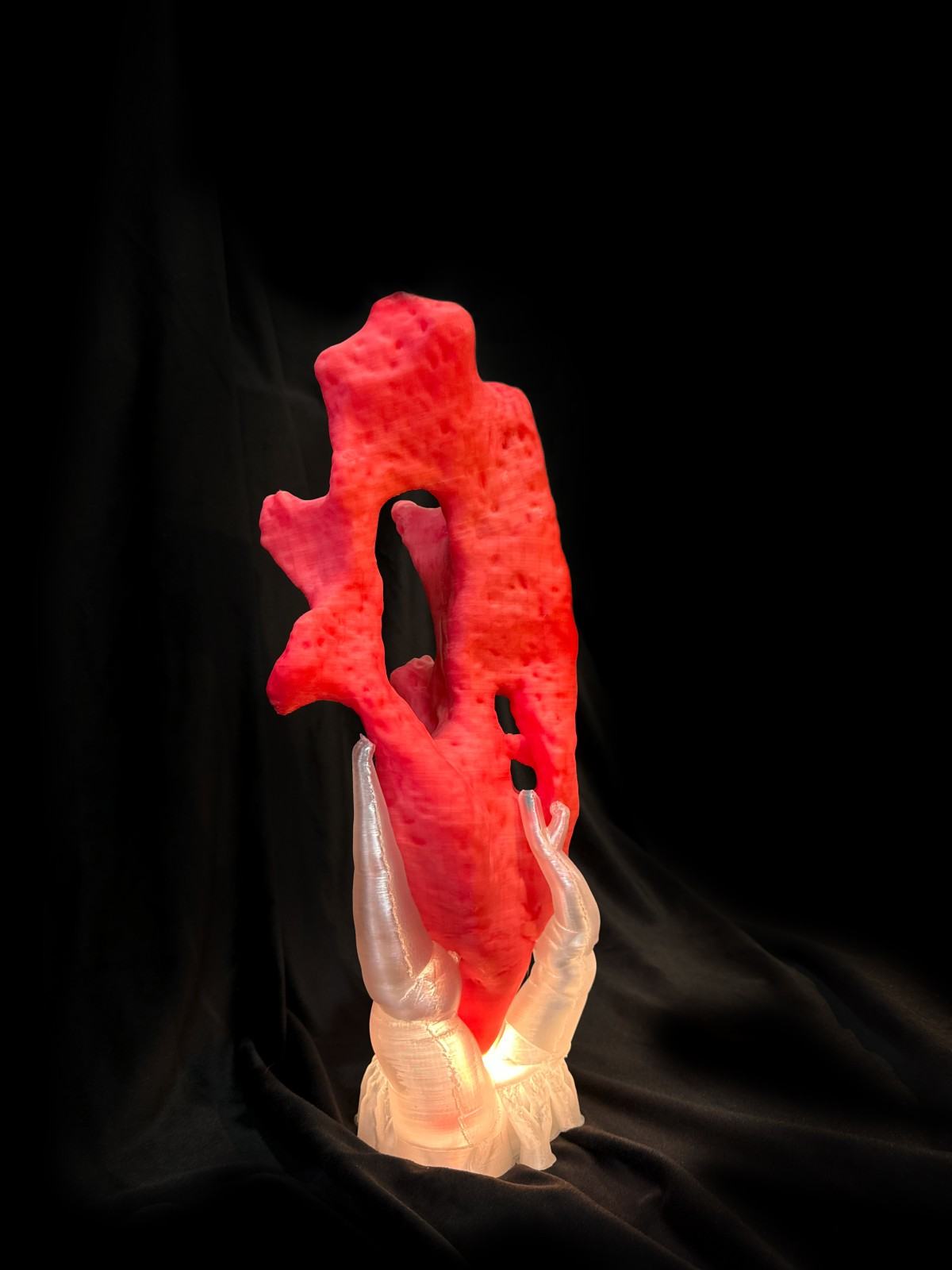
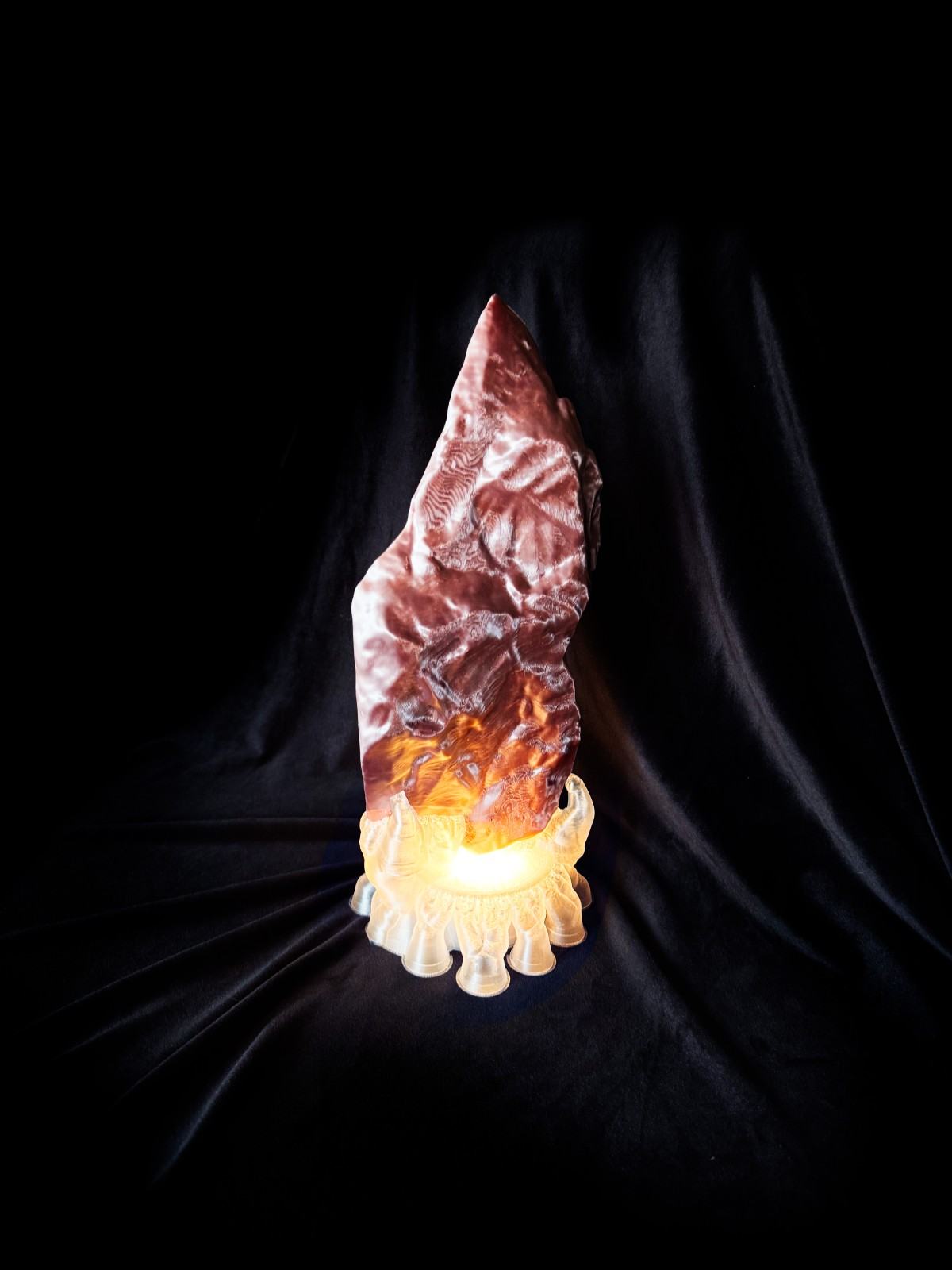
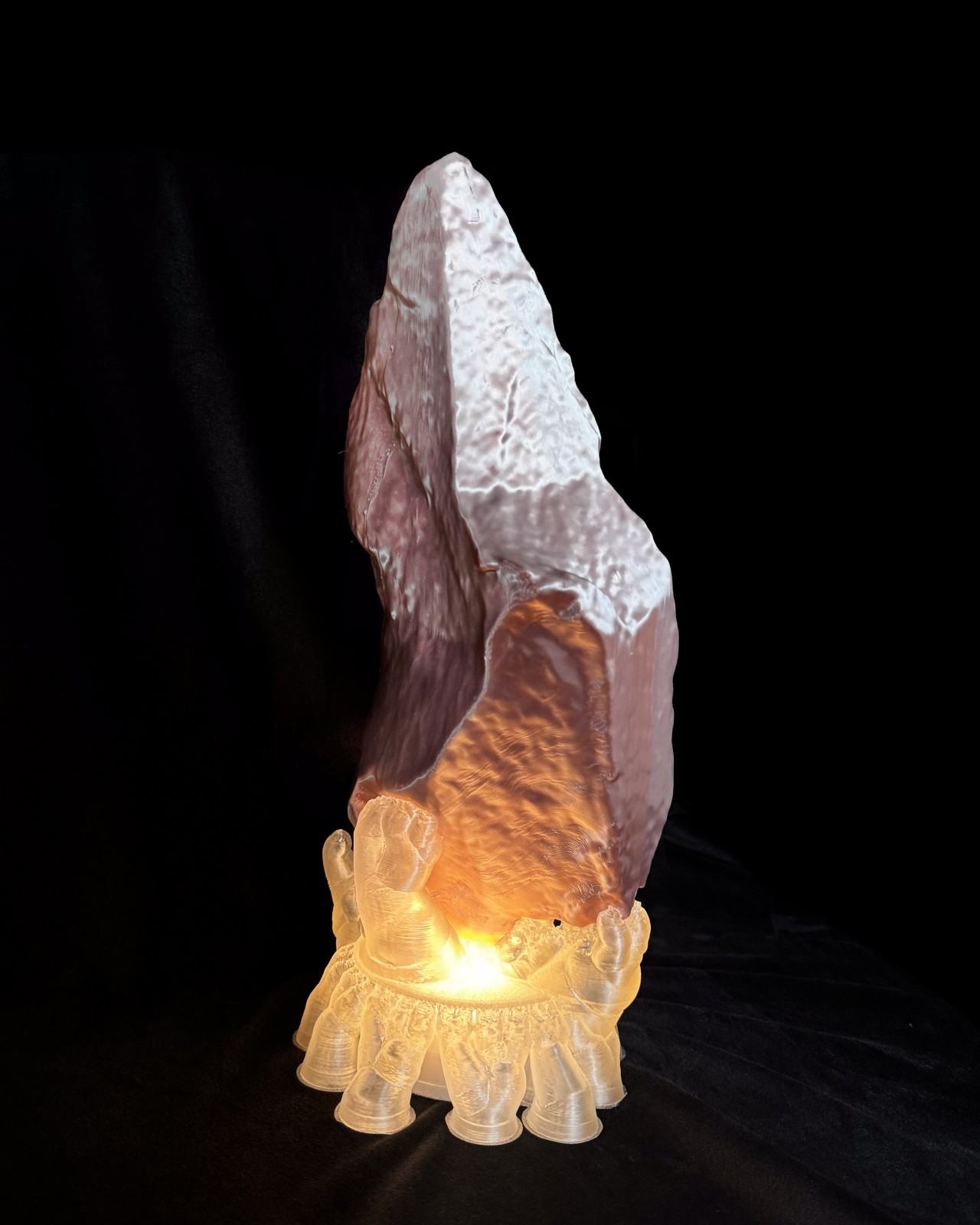
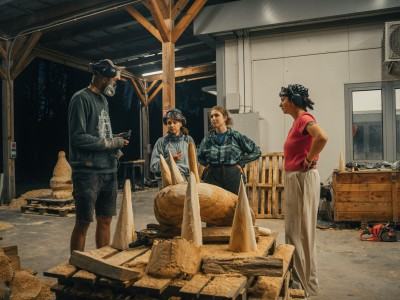
The stone becomes both a symbol and the central subject of the artistic activities through which I investigate this sensitivity of art. Although stones are commonly associated with coldness and rigidity, a closer look into fragments of rock reveals their history and inner structure. The stone also constitutes humanity’s first tool, naturally fitting into the human hand. Through processes of translation — such as 3D scanning and 3D printing, recordings, and photography — I explore the transformations that occur through different forms of registration and mediation. I extend the printed objects with interactivity by concealing sensors and microcontrollers within them. The stone becomes an interface through which the participant manipulates the projection of a virtual model of the object they are physically holding. As the object rotates, the soundscape moves along with it. The installation INTERWORLD[2] consists of six such objects, surrounded by a monochromatic projection that shifts in color from red to gray during interaction.
Reality and virtuality become entangled and interconnected. INTERWORLD opens a gateway toward the fluid fusion of nature and technology, inviting the viewer to participate in the synergy emerging between them.
Doctoral Dissertation by Laura Adel
Supervisor: Professor Jakub Jernajczyk
Video documentation of the installation: https://youtu.be/jFdcCKEm-d8?si=KH6ZyaeBirs_9kLb
http://lauraadel.com/
[1] Dialogicality is a transdisciplinary category: it connects philosophy, the humanities, social sciences, and the practice of social life. Among its many sources, it is worth emphasizing the relationship between the dialogical attitude and the philosophy of dialogue (Emmanuel Levinas), literary theory (Mikhail Bakhtin — the dialogical nature of language and literature), and aesthetics (Hans-Georg Gadamer — the encounter with a work of art as a conversation).
[2] Presented during Sonic Saturday, part of the Ars Electronica Festival, 5–6 September 2025, Linz, Austria.